

Emergency Hotline
+(603) 5515 1999

Appointments
+(603) 5515 1966
General Line
+(603) 5515 1888

 March 19, 2024

Do you sometimes wake up at night feeling bloated? Do you feel heavy even without eating or feel gassy and acidic at times? Then probably the culprit is your gut.
Gut health has taken the central stage of late, thanks to the modern lifestyle of people and increased consumption of junk food. Do you also have a few questions about gut health in your mind?
In this article, we discuss 9 most commonly asked questions about gut health and tell you how to keep your gut healthy.
Our gut is the gastrointestinal system which consists of the stomach, intestines and colon. It digests foods, helps the body absorb nutrients from it and excretes waste. Our gut also consists of 200 different species of bacteria, viruses and fungi that live in our large intestine. These microorganisms, known as gut microbiomes, help the digestive tract to break down food and turn it into nutrients that can be used by our body.
Gut health basically refers to how fine your digestive tract is functioning to ensure nutrients are properly digested to meet your nutrition needs and waste products are ejected out of your body. The functioning of the microbiome present in our gut is also included within the purview of gut health. In turn, all this ensures the strength of your immune system.
Like all systems, our digestive system is also linked to other bodily functions. Our gut health has a direct impact on:
– Our immune system
– Autoimmune system
– Mental health
– Endocrine system
– Gastrointestinal system such as proper bowel movement
– Cardiovascular system
– Sleep
The diversity of gut bacteria is also an important aspect of our gut health. Overall, our gut health has a direct impact on our overall well-being.
Gut health can be negatively affected by:
– Too little sleep or disturbed sleep
– High level of stress
– Lack of physical activity
– Smoking or drinking alcohol
– Eating too much of processed food
– Taking antibiotics for too long
Gut microbiome can also be affected by factors out of our control such as age, birth mode, environment and others.
Some of the symptoms of poor gut health are:
1) Digestive symptoms such as bloating, constipation, gas, heartburn and diarrhoea.
2) Sleep disturbances or fatigue
3) High levels of stress, anxiety, depression or feeling low
4) Frequent infectious diseases such as common cold and flu.
If you are facing any of the above, consult your doctor immediately. Follow your doctor’s suggestions on how to improve your digestive health.
Well, the two most important factors that have a direct impact on gut health are diet and lifestyle. By making positive changes to both of these, you can improve your gut health.
Food rich in dietary fibre can improve your gut health and reduce the risk of bowel cancer. Having fibre can improve the presence of healthy bacteria in your gut too.
Hence, be sure to include vegetables, fruits, legumes, nuts and whole grains in your diet. This can also prevent the growth of bacteria linked to diseases in your gut.
Having a healthy lifestyle is another way to improve your gut health. A good night’s sleep and less stress can have positive effects on your gut.
Our gut bacteria is strongly influenced by what we eat. The food also serves as the fuel for a balanced gut microbiome. Ensure to have a healthy diet full of a range of fresh and whole foods. Include vegetables, fruits, beans, legumes, whole grains and nuts.
One of the important aspects when it comes to food is fibre. Fibre improves the digestion and absorption of nutrients, thus improving the function of our gut. It also helps in the quick movement of stool through our digestive system.
The breakdown of fibre in our gut also helps avoid diseases such as bowel cancer. Fibre can also reduce the risk of type 2 diabetes as well as developing heart disease.
Some of the best sources of fibre are:
– Legumes such as beans, lentils and chickpeas.
– Vegetables such as onions, garlic and leek.
– Whole grains such as barley, oats, rye, etc.
– Nuts such as cashews, almonds and pistachios.
Another great way to improve gut health is to limit ultra-processed food. Processed foods have high amounts of sugar, salt, additives, unhealthy fats, artificial sweeteners and others which can directly impact our gut health.
Finally, drink a lot of water every day. Water has extensive benefits to gut health and also helps in breaking down food so that the nutrients are absorbed in our body. Water also helps in preventing constipation by softening stools.
Yes. Medicines and alcohol affect the intestinal mucosa which can lead to an imbalance in the gut microbiome. Taking medications such as laxatives, antibiotics, female hormones, antihistamines and antidepressants can alter the composition of the gut microbiome.
Coffee, on the other hand, works as a probiotic and has a positive effect on the gut microbiome. Coffee also contains soluble fibre galactomannans and arabinogalactans, which help in improving gut health.
Our brain and the digestive system are linked closely. Whenever we think of eating, our stomach releases juice, even before the food gets there. This connection works the other way too. Disturbances in our gut send signals to the brain which can affect our emotions. Hence, emotional aspects such as stress, depression and anxiety can be caused by an unhealthy gut. This is known as the gut-brain connection.
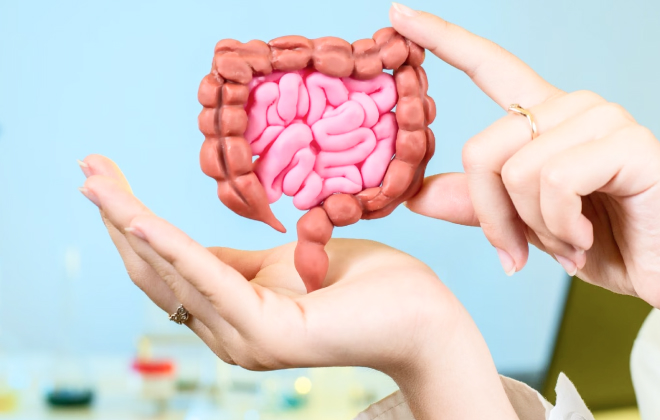
Gut health is closely linked to our overall well-being. One does not get a healthy gut overnight. It takes a combination of regular consumption of healthy food, a healthy sleep cycle and exercise to pave the way towards having a healthy gut.
People often go for colon cleansing to improve gut health, but there is no scientific evidence behind this. It is advisable to consult a medical practitioner before opting for any method that promises good gut health.
 Call Us
Spread the love, follow us on our social media channels