

Emergency Hotline
+(603) 5515 1999

Appointments
+(603) 5515 1966
General Line
+(603) 5515 1888

 May 1, 2024

One of the most common diagnostic techniques, and probably one of the most feared is an MRI Scan. The entire process is dreaded by many. But is there really anything to worry about? Let’s break down the MRI scan step by step and understand more about it.
MRI or Magnetic Resonance Imaging is an imaging scan where radio waves and magnetic fields are used to take pictures of the inside of the body. It is very beneficial for taking pictures of soft tissues such as muscles and organs that cannot be captured through X-rays.
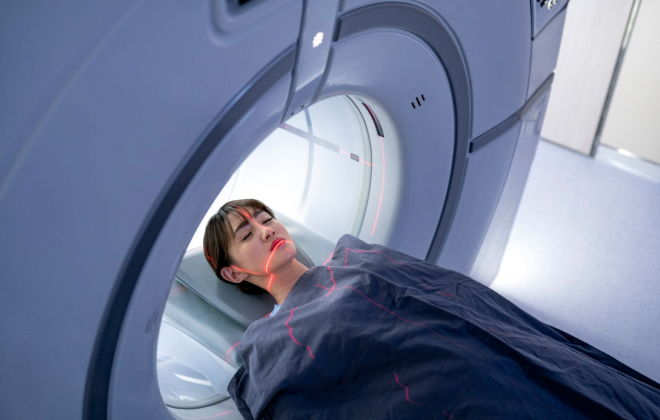
Usually, MRI machines are magnets – large, tube-shaped inside which you have to lie down. The magnetic field works with hydrogen atoms and radio waves in your body to create cross-sectional images which lead to 3D images that show your soft tissues.
Unlike X-rays which take images of the calcium present in your body, MRI scans take the image of water in your body. As all tissues of the body contain water, MRI scans show the soft tissues, muscles and organs. MRI scans can provide high-resolution images of many organs that cannot be seen through normal X-rays.
An MRI scan is used to diagnose and investigate conditions that affect the soft tissues of the body. Ailments related to the following organs can be investigated through MRIs:
With the right kind of preparation, MRI doesn’t have to be worrisome. Let’s break down the preparation step by step:
During MRI, you will have to lie in an enclosed tube-shaped machine and stay still for the entire duration. This could be as long as an hour. This can be a cause for anxiety if you already have claustrophobia.
Talk to your doctor about your concerns and share any history of claustrophobia with them. They may even prescribe a medication that you can take before the procedure starts.
One of the most important things to keep in mind is that you cannot have any metal on you during an MRI as the MRI machine is actually a giant magnet. Hence you cannot wear any jewellery during the test. If you wear precious jewellery, leave them at home.
You need to talk honestly with your doctor and disclose things that can be problematic such as if you have any metal implants. In case you have gone through a root canal and wear a metal crown, do not forget to inform your doctor about it.
Other specific things that your doctor should be aware of are:
Hiding your health conditions can lead to issues during the scan. Discussing your medical history is a crucial part of prepping for your MRI.
Feeling nervous during an MRI? Don’t worry, you’re not alone. Let’s give you a clear idea of what is going to happen so that you know what to expect during the exam.
To begin with, you will be asked to change into a hospital gown. Remove any metal items including jewellery, dentures, hairpins, hearing aids and even bras with underwires. Once you’re ready, you will be guided into the MRI room.
The machine is a table shaped like a bed with a giant tube fitted on top of it. The bed slides out from the tube, where you will lie. Once you lie on it, the table will slowly slide into the tube. In some cases, the doctor may decide to administer contrast dye to better understand certain aspects of the body. The contrast dye will be administered through an IV in the upper arm.
Yes, the MRI machine is noisy, so it’s better to be prepared for it. It definitely isn’t the most pleasant experience, but unfortunately, it cannot be avoided. You will hear loud thumping and pulsing noises, while the machine is working. If you think the noise might disturb you, ask the MRI technician for earplugs or a pair of headphones to lessen the impact.
The most important aspect during the MRI is to lie still. The scan takes about 45 minutes to an hour, during which each part of the body is scanned. While you can talk to the technician in the other room the entire time, you will be asked to lie still for the most part. The technician might give you instructions from time to time such as wiggling your fingers. Try to complete the requests as much as possible.
Well, we’re sure you’ll be breathing a sigh of relief once you’re done with your MRI. But keep in mind these aspects after the MRI:
Your doctor might give you some medication to ease the claustrophobia. So it may not be advisable for you to travel back alone and definitely not drive alone. Plan for this beforehand. It will be best to have someone accompany you to the procedure, but if this is not possible, arrange for someone to pick you up after you’re done.
Although uncommon, some people still get allergic reactions to the contact dye. In case you’ve been administered dye, keep a watch out for allergic symptoms such as:
Call your doctor immediately if you face any of these symptoms.
We hope we have been able to address your concerns about the MRI scan to some extent. Keep calm and remember the scan is being done for your benefit. Talk openly with your doctor and medical team to make the process smoother for you.
 Call Us
Spread the love, follow us on our social media channels