

Emergency Hotline
+(603) 5515 1999

Appointments
+(603) 5515 1966
General Line
+(603) 5515 1888

 February 26, 2024

We’ve all heard about root canal treatment. Most adults go through at least one root canal treatment in their lifetime. However, many of us don’t know what it exactly is. There are also a range of myths about this treatment, with people coming up with their own interpretations.
Let’s understand root canal treatment in more detail and also break some of the misconceptions associated with it.
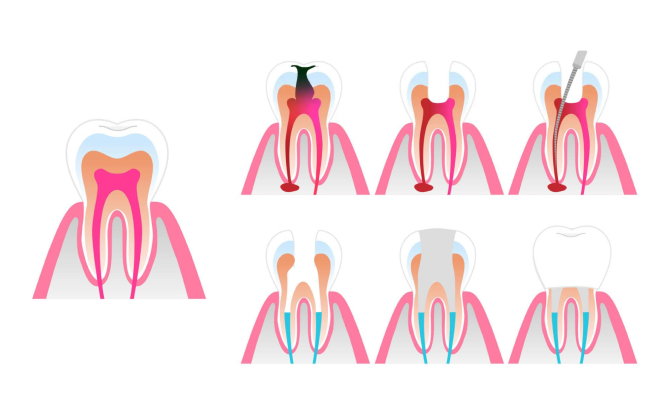
A root canal is a treatment done to remove infections in the tooth pulp, the innermost layer of the teeth.
The infected or inflamed pulp inside the tooth is removed, then cleaned and disinfected, and finally filled and sealed during the process.
This treatment is done to remove bacteria from the infected root of the tooth and prevent reinfection of the tooth. The final goal is to save the original tooth.
Sometimes bacteria inside our mouth invade the pulp inside our teeth, causing inflammation. This happens when:
Many of us ignore tooth problems till it is too late and the pain becomes difficult to bear. However, going to the doctor early can save us a lot of trouble and help salvage the original tooth as well.
You may want to see your dentist if:
It is important to remember that all tooth infections don’t require a root canal treatment. If you face any of these problems, meet with your dentist. Your dentist will take X-rays of your affected tooth to determine if your root pulp is dead, inflamed or infected and decide whether you need a root canal. They may do other diagnostic tests too.
The main aim of the root canal is to remove the inflamed pulp, then clean and disinfect the inside of your tooth and finally fill the tooth and seal the place. Here are the steps of root canal in general:
This entire process typically takes two to three weeks to complete. You may be asked to rest a few minutes after every sitting before leaving the dentist’s clinic. The anaesthesia may take some time to wear out so your gums and mouth may be numb.

A root canal treatment can help you with the following:
Well, most people are sceptical about endodontic treatments such as root canals. Hence, there are a lot of myths surrounding the issue. Let’s look at some common ones and understand the truth behind them:
Thanks to anaesthetics and modern technology, there’s hardly any pain associated with root canal treatments nowadays. The amount of pain is similar to having your cavities filled up. You may however experience toothache before the root canal treatment.
Well, saving your natural tooth is always the best option. Artificial teeth never look as beautiful as natural teeth. Hence, we always suggest considering root canal treatment before pulling out a tooth. Many of the teeth treated by root canal treatment last a lifetime, so it is always a better option.
There are many theories surrounding root canal treatment, with some claiming they lead to other illnesses such as systemic disease. However, this myth has been long debunked through various research. There’s no scientific basis to link root canals to cancer or diseases in other parts of the body either.

Root canal treatment is an effort to save your normal tooth and maintain your natural appearance.
Taking care of the tooth and yourself after the treatment is essential to obtain the best results. Eat soft food for the first few days after the treatment. Avoid chewing with your treated tooth. Not smoking during the time the temporary seal is fixed is highly recommended.
After the treatment, brush and floss your teeth after every meal or at least in the morning and night and using antibacterial mouthwash is immensely beneficial.
A root canal treatment is successful in most cases. If the tooth can be taken care of, a root canal treatment can last a lifetime.
Yes, in most cases it does and the pain goes away completely. In very rare cases the pain may persist.
The infection in the tooth that needs a root canal increases, if not treated on time. Gradually, this can result in bone loss and severe infection, requiring a tooth extraction.
Sources:
 Call Us
Spread the love, follow us on our social media channels