

Emergency Hotline
+(603) 5515 1999

Appointments
+(603) 5515 1966
General Line
+(603) 5515 1888

 March 18, 2024

With the increased depletion of the ozone levels, the atmosphere is losing its protective filter function, causing various kinds of diseases, skin cancer being one of the primary. The number of skin cancer cases around the world is on the rise. Currently, around 3 million people across the world suffer from this disease. In Malaysia, skin cancer accounts for 2.6% of all cancer cases.
Given the rising incidence, it is important to take a look at this form of cancer. Let’s answer seven frequently asked questions and delve deeper into this disease.
Skin cancer is an abnormal growth of cells that develop on skin cells. While it mostly develops on skin exposed to the sun, it can also develop on skin that’s not exposed to sunlight.
Usually, when our skin cells grow old and die, new cells are formed to replace them. Prolonged exposure to ultraviolet light could change the way your skin cells grow or lead to the cells growing too quickly. These cells can be benign (noncancerous) or cancerous.
Skin cancer can develop in a portion of your skin and spread to other areas of the body, if not caught early. Skin cancer can be cured if it is caught early. Hence, it is important to understand the symptoms and contact a dermatologist as soon as you face any of them.
The most common warning sign of skin cancer is a new growth or change in an existing mole or growth. Other skin cancer symptoms include:
1) Scar-like patches on the skin
2) A patch or a bump that’s flat, red/pink or brown-coloured patch1)
3) A waxy bump on your ears, neck and face
4) Skin sores that have a depression in the middle or bleeds often
5) A wound that will not heal or one that heals and comes back again and again
6) A lesion that bleeds, itches or becomes crusty
7) A large brownish spot with darker speckles
Skin cancer is mainly of three types:
1. Melanoma skin cancers
Melanoma skin cancers start in the melanocytes, cells that make the pigments that give our skin the colour. The pigment is known as melanin. This kind of cancer usually starts on the skin that is regularly exposed to the sun, such as the face, arms, back and legs. It can also form in the eyes, but rarely on organs inside the body such as the nose or throat. In rare cases, it can also form on skin non-exposed to the sun. Melanoma skin cancers are one of the major causes of death from the disease.
2. Basal cell carcinoma
This kind of cancer originates in the basal cells situated in the lower epidermis, the outermost layer of your skin. This commonly develops in people with fair skin, although people with darker skin can also have it. Basal cell carcinoma mostly commonly develops in the head, arms and neck and usually develops due to years of frequent sun exposure or indoor tanning.
3. Squamous cell carcinoma
Squamous cell carcinoma forms in the cells forming the outer layer of your skin and is common in people with lighter skin colour. This looks like a scaly patch, a red firm bump or a sore that heals and reopens. It forms commonly on the face, neck, ear, arms, chest and back. This kind of cancer can grow deep into the skin, causing significant disfigurement.
The most common risk factors of skin cancer include:
– Family history of skin cancer
– Freckles or moles
– Overexposure to UV radiation
– Freckled skin, blonde hair or light-coloured eyes
– History of sunburn
– Weak immune system
– Exposure to radiation through radiation treatment for skin conditions
– Personal history of skin cancer
Melanoma, the more aggressive kind of skin cancer can spread quite quickly and become life-threatening within as low as 6 weeks, if untreated. It can also spread to other parts of the body.
Although basal cell carcinoma is a slowly progressing cancer, if left untreated, it can progress locally to healthy cells around it.
Squamous cell carcinoma is also a gradually progressing cancer but grows more rapidly than basal cell cancer. This cancer has more risk of spreading to other areas of the body such as the local lymph system, if left untreated.
The best way to avoid skin cancer is to protect your skin from the sun and other sources of UV rays. Here are a few things you can do to avoid skin cancer:
– Stay away from the sun between 11 am to 4 pm.
– Wear long-sleeved clothes to cover your arms or long pants or a long skirt to cover your legs. Also use hats, caps and sunglasses to protect your face and eyes.
– Use sunscreen with SPF 15 or higher.
– Avoid indoor tanning machines.
Check your body regularly for signs of skin cancer, especially if you cannot avoid sun exposure.
While reducing sun exposure is the best way to reduce the risk of sun exposure, here are a few foods that you can eat to help avoid the disease:
– Orange fruits and vegetables such as carrots, squash, yams, mangoes, peaches, apricots and cantaloupe.
– Rich in vitamin C such as citrus fruits, berries, bell peppers, broccoli and leafy greens.
– Vitamin D rich food such as milk, and cheese.
– Food containing omega fatty acids such as fatty fish like sardines, mackerel, tuna, herring and salmon, walnuts and flaxseed.
– Food rich in vitamin E such as peanuts, almonds, beets, collared greens, spinach, red bell pepper and pumpkin.
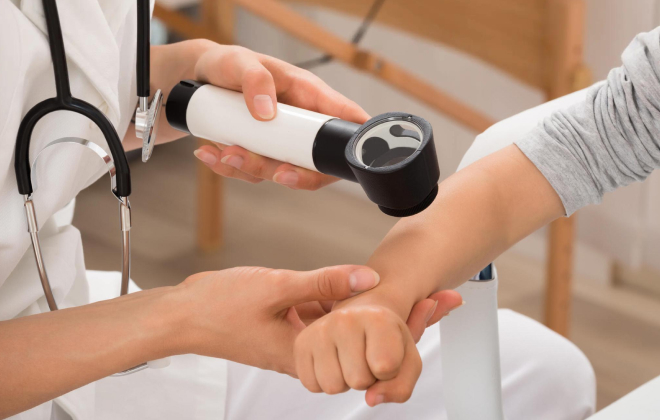
Like all other cancers, early detection is key when it comes to skin cancer, especially melanoma cancer. Examine your skin regularly for warning signs of skin cancer. If you find a spot that doesn’t look right, contact your dermatologist immediately.
Your doctor will examine you to diagnose if it is skin cancer. They may conduct additional tests to determine the stage of skin cancer. In most cases of basal cell carcinoma, the entire growth is removed through a biopsy. However, in cases of large squamous cell carcinoma, the doctor may conduct additional tests to determine the extent of the cancer. Melanoma is usually treated through surgery.
Having clear discussions with your dermatologist and medical team can help you get a clear understanding of the extent of your disease. And finally, follow the recommendations of your medical team to ensure that you make the most out of your treatment.
Sources:
 Call Us
Spread the love, follow us on our social media channels